

Material impacts, risks and opportunities
In 2025, the PZU Group conducted a review of the double materiality assessment process detailed in the 2024 report. The review analyzed changes in the business and regulatory environment and reassessed major impacts, risks and opportunities.
On its basis, it was confirmed that the relevant topics identified in 2024 and the assumptions of the assessment methodology remain valid. In 2025, the scope of impacts, risks and opportunities was clarified. The list of relevant topics is consistent with that published in the previous reporting period.
For the purpose of the assessment, PZU Group defined its value chain, with a detailed description included in the section PZU Group Business Model and Value Chain.
The assessment was carried out considering three time horizons: short-term (up to 1 year), medium-term (1-5 years) and long-term (more than 5 years). Impacts, risks and opportunities were analyzed in the context of operations, investments and business relationships across the value chain.
Significant impacts, risks and opportunities of the Pekao Group and the Alior Bank Group
As required by the Accounting Act, the Pekao Group and the Alior Bank Group have prepared their own sustainability statements. In 2025, both groups updated their double materiality assessments.
Due to differences in methodology and the scale of operations, the identified material impacts, risks, and opportunities differ between these entities. To ensure consistency and to give a complete picture, the PZU Group analyzed the DMA results of both banking groups.
It included those impacts, risks and opportunities that were considered significant in both groups in its assessment by aggregating and mapping them to the respective components of the PZU Group’s value chain, i.e., business banking and retail banking, as well as by recognizing them within its own operations.
- Pekao Group Sustainability Statement;
- Alior Bank Group Sustainability Statement.
Significant impacts, risks and opportunities of Armatura Kraków
Due to the different nature of the business, the PZU Group’s double materiality assessment includes an additional analysis of the impacts, risks and opportunities for Armatura Krakow.
The analysis identified a potentially significant negative impact in topic E2 – pollution in the supply chain. This is due to the large share of aluminum radiator production and imports of bathroom fittings. 100% of the aluminum purchased for radiator production comes from recycled aluminum casting alloys in the form of EN-AB 46000 (46100) ingots made from 100% recycled aluminum. At the same time, Armatura Krakow takes mitigation measures aimed at reducing the intensity of the potential impact, focusing on the circular use of aluminum in its operations: it engages in full recovery of materials, multiple remelting without loss of quality, and optimization of the production cycle, which reduces the consumption of primary raw materials and energy, and reduces the volume of waste transferred for processing. Since 2022, shortages in radiator production have dropped from 0.77% to 0.41%, which shows an improvement in the material and energy efficiency of the process and an indirect reduction of environmental pressures associated with supplying aluminum and components of fittings as well as polluting the air.
Identified relevant topics
Impacts, risks and opportunities were assigned both to ESRS topics, as well as to additional topics that the PZU Group considered important.
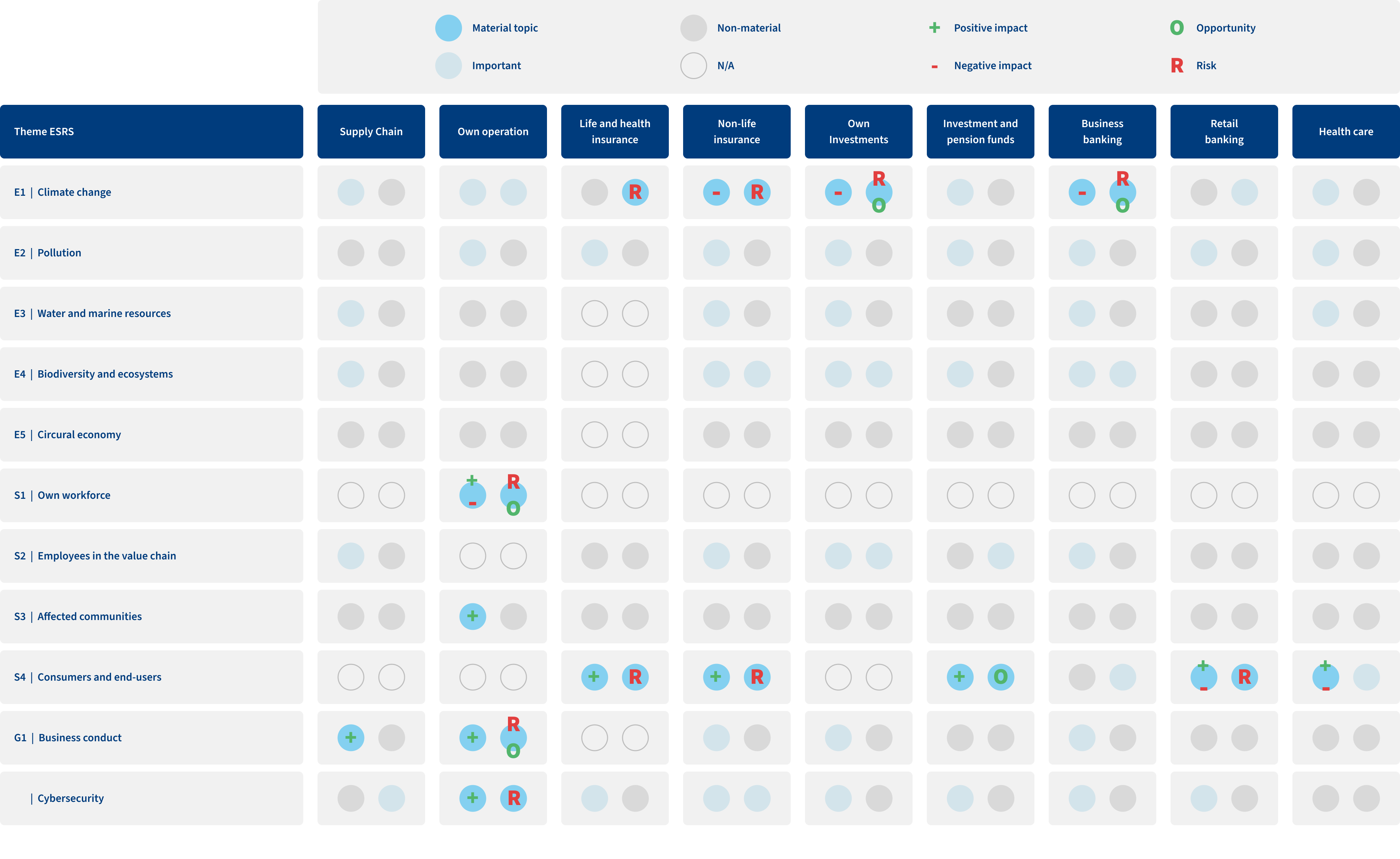
The environmental topic of climate change is particularly relevant in the context of property insurance, life and health insurance, own investments and business banking. PZU Group identifies significant negative impacts and risks resulting from the activities of business clients in this area. In addition, potential opportunities from investment activities that can support the climate transition have been defined in 2025.
The topic of workforce is relevant to own operations. In 2025, based on the review of the double materiality assessment, a potentially negative impact regarding working conditions was further clarified, particularly with respect to overtime for selected groups of positions, as well as a potentially negative impact resulting from emerging tensions in the area of employee communication and participation. Consumers and end-users are an important topic for components of the value chain: health and life insurance, property insurance, investment and pension funds, retail banking and health care. In 2025, we identified a potential negative impact resulting from insufficient information about products and services which could be potentially misleading for customers in making financial decisions.

An opportunity was identified for investment and pension funds resulting from financial education and increased customer awareness on investments, which could lead to greater confidence in funds and an increase in the number of investors. Safe investment products are an opportunity to build stability and loyalty for customers who are looking for capital protection while enjoying moderate growth, which is particularly important in times of economic uncertainty. Consequently, no risks were revealed for this component of the value chain.
The scope of impacts, risks and opportunities in the other relevant topics (affected communities, conduct in business) remained unchanged with respect to the previous year. Similarly, by 2024, the PZU Group has identified cybersecurity as a significant topic in terms of its impact on and risk in the PZU Group’s operations.
Material impacts, risks and opportunities of PZU Group
(aggregated at the subject level)
The identified significant impacts include both actual and potential impacts over three time horizons: short-term, medium-term and long-term. Actual impacts during the reporting period or those which are ongoing relate to the current operating, investment and business activities of PZU Group entities and CO2e emissions related to customer activities. Potential impacts are those that may occur with a certain probability in the short term (up to 1 year), medium term (1-5 years) or long term (more than 5 years), according to the definitions adopted in the Time horizons section. In assessing materiality, the PZU Group has shown which impacts are actual and which are material as potential. The identified impacts, risks and opportunities were considered material in all three horizons.
| ESRS | Subtopic | Value chain element | Type of impact | Description |
|---|---|---|---|---|
| E1 | Climate change adaptation Climate change mitigation |
Non-life insurance | Actual and potential negative impact | Negative effects related to climate change in the non-life insurance portfolio result from insuring clients operating in high greenhouse gas emission sectors. An additional potential negative impact of climate change is the risk of insurance protection not being adapted to new natural catastrophe realities |
| Own investments | Actual and potential negative impact | PZU Group’s investment portfolio consists of many assets that may impact the climate. In addition to entities directly linked to renewable energy assets (so-called “green” assets), the Group’s portfolio also includes holdings in high-emission industries. | ||
| Business Banking | Actual and potential negative impact | Financing companies in high-emission sectors may contribute to increased greenhouse gas emissions. At the same time, business clients may face financing restrictions due to the need to align their operations with climate requirements. | ||
| S1 | Working conditions | Own operations | Actual positive impact | The PZU Group ensures stable and safe working conditions. Flexible hours and a hybrid work model can positively affect work efficiency and give employees a better opportunity to adjust their working arrangements to their needs, within the framework of existing rules. Growth opportunities and internal promotions, combined with a predictable career path, can foster greater job security and long-term employment. Training programs including various forms of education: e-learning, internal training, external training. Funding for postgraduate degree programs. These activities contribute to the development of employees. Improvement of the quality of work by ensuring appropriate OSH rules and policies, implementing well-being programs, such as the #DobryStan strategy which promotes the mental and physical well-being of employees. Trade union representation and effective channels of communication between employees and management – regular employee satisfaction surveys conducted, which make it possible to identify and address their needs and areas for improvement. |
| Potential negative impact | Overtime for selected groups of positions, e.g., in the event of mass claims. Tensions in the area of employee communication and participation can affect perceptions of the importance of social dialog and cause dissatisfaction on the part of society with the failure to address demands. | |||
| Equal treatment and opportunity for all | Own operations | Actual positive impact | Anti-mobbing procedures for employees with whistleblowing mechanisms implemented in accordance with good market practices. | |
| Potential negative impact | The share of women in the management and supervisory bodies of the largest PZU Group entities (PZU, Bank Pekao, Alior Bank) is approximately 17%, which remains below the level set out in EU regulations and may potentially have a negative impact on equal opportunities. | |||
| Other work related rights | Own operations | Actual positive impact | The PZU Group’s data privacy policy and related data protection procedures provide systemic safeguards for employee and customer information, which directly protects their right to privacy and confidentiality in the workplace | |
| S3 | Economic, social and cultural rights of communities | Own operations | Actual positive impact | Investments to improve safety and quality of life, social inclusion efforts and promotion of local cultural initiatives strengthen local communities. Nationwide social initiatives such as sports or cultural patronage positively affect the society of countries in which the PZU Group operates. |
| S4 | Impact of information on consumers or end users | Life and health insurance | Actual positive impact | Implemented solutions to make services more accessible, such as tailored service procedures, simplified visual communication, plain language materials, and development of digital channels. Education on health and life insurance. Impact on the protection of customer rights by the Client Ombudsman. |
| Investments and Pension Funds | Actual positive impact | PZU’s investment and pension funds offer information to help identify investments that support sustainable development goals, empowering clients to make financial decisions aligned with sustainable development principles. | ||
| Retail Banking | Actual positive impact | Increasing social inclusion in financial services by offering banking products that are accessible to different customer groups, including young people, seniors, and those with lower incomes, and ensuring product accessibility by translating key documents into Ukrainian. | ||
| Retail Banking | Potential negative impact | Potential customer misrepresentation through insufficient information about products and services, and damage caused by data theft and protection incidents. | ||
| Healthcare | Potential negative impact | Potential insufficient transparency of product information with respect to, among other things, the scope of services, the price of their availability. | ||
| S4 | Personal safety of consumers Social integration of consumers |
Life and health insurance | Actual positive impact | The inclusion of mental health aspects in protection and health insurance and the extended coverage includes both physical and mental health of clients, with psychological support during post-illness rehabilitation. |
| Non-life insurance | Actual positive impact | Providing communication channels, including complaint mechanisms, builds trust, solves problems, obtains feedback and strengthens the relationship with customers. High availability of PZU branches adapted to people with limited mobility (more than 70% of branches). Communication and customer service procedures tailored to the needs of seniors. Rapid response procedures in case of mass claims. |
||
| Healthcare | Actual positive impact | Impact on the protection of customer rights by the Patients Ombudsman. Medical services in a wide price range, equalizing access to private healthcare, particularly in smaller towns, thanks to the high availability of clinics and outpatient facilities outside major urban areas. | ||
| G1 | Corporate culture | Own operations | Actual positive impact | The PZU Group shapes ethical standards in the financial sector; it influences the behavior of employees and partners. The PZU Group is a signatory to the Principles of the UN Global Compact. |
| Whistleblowing | Own operations | Actual positive impact | The PZU Group’s whistleblowing and whistleblower protection systems include specific procedures, communication channels and training to raise awareness of employees and foster an ethical culture. | |
| Corruption and bribery | Own operations | Actual positive impact | Anti-corruption policies and programs increase transparency and reduce the risk of corruption in the PZU Group’s own operations. Corruption and bribery are prevented by training employees in anti-fraud procedures and ethical conduct. | |
| Relations with suppliers | Own operations/supply chain |
Actual positive impact | Implementing ESG standards, ethical principles and practices that support sustainability in purchasing processes and supplier relationships translates into building awareness and can translate into an increase in the importance of ESG aspects. | |
| Cybersecurity | Own operations | Actual positive impact | The use of advanced security technologies protects client data and ensures operational stability. | |
| ESRS | Subtopic | Value chain element | Risk / Opportunity | Description |
| E1 | Climate change mitigation Climate change adaptation |
Life and health insurance | Risk | Physical risks associated with increased mortality due to extreme weather events and higher temperatures. |
| Non-life insurance | Risk | Transition risks associated with the discrepancy between the pace of the transformation of the Polish economy and changes in the reinsurance market. Physical risks associated with more frequent extreme weather events and fires. | ||
| Own investments | Risk | Transition risks associated with investments in high-emission sectors that increase regulatory risk in respect of climate change. The need to adjust the portfolio to climate risks may limit potential ROIs. | ||
| Opportunity | The opportunity is increased interest in ESG investment funds and the financing of green projects – PZU as an investor in RES, low-emission infrastructure and adaptive technologies. | |||
| Business Banking | Risk | Providing financing to high emitters can be seen as inconsistent with climate goals and stakeholder expectations. The result can be a loss of reputation, pressure from investors and social organizations, and limited ability to raise capital. Failure to adapt lending policies to the transition risks affecting customers operating in high-emission industries could reduce the Group’s profitability and competitiveness. | ||
| Opportunity | The opportunity lies in the development of financial products on offer that support the reduction of GHG emissions and accelerate customers’ transition to a low-emissions economy. Development of product offerings that support the energy transition or are designed for net zero/low-emission sectors, development of advisory and prevention services, consulting for corporate clients on climate and ESG risk management. |
|||
| S1 | Working conditions | Own operations | Risk | The risk of experiencing a shortage of skilled workforce, particularly in areas requiring specialized skills, and of exceeding the salary budget – resulting from market pressures and the need to hire highly paid specialists. Risk in the area of working conditions – possible undesirable behavior, such as workplace bullying or actions that violate the dignity of employees. Situations of this type can affect the sense of job security, so they require constant monitoring and strengthening of preventive measures. Risk of strikes and protests. |
| Opportunity | Social dialog and collective rights to improve working conditions and prevent unequal treatment. | |||
| Equal treatment and opportunity for all | Own operations | Risk | Risks related to the size and high diversification of the PZU Group. The organization employs representatives across four generations, and this means more diverse employee needs and the need for tailored management methods. | |
| Opportunity | Joining the Charter of Diversity, participating in diversity audits and rankings provides an opportunity to implement concrete measures to support inclusiveness and improve the work environment. Internal recruitment system to develop skills and retain talent in the organization. |
|||
| S4 | Impact of information on consumers or end users | Life and health insurance Non-life insurance |
Risk | Lack of sufficient transparency of information may lead to misunderstandings and decreased client trust. |
| Retail Banking | Risk | Legal risks as a result of violations of law or rules for drawing up contracts with customers, which may result in claims, sanctions or legal costs. Misselling can result in customer complaints, supervisory proceedings, lawsuits and the need to pay compensation, which generates legal and financial costs. Elevated risk of fines imposed by UOKiK as a result of Bank Pekao S.A.’s practices, including those related to free credit sanctions and unauthorized transactions. Due to growing customer activity, as well as consumer protection afforded by the regulator, which is launching more proceedings against the Bank, we have identified that the risk may materialize in 2025. | ||
| Investments and Pension Funds |
Opportunity | Financial education is an opportunity to increase customer awareness on investments, which could lead to greater confidence in funds and an increase in the number of investors. Safe investment products are an opportunity to build stability and loyalty for customers who are looking for capital protection while enjoying moderate growth, which is particularly important in times of economic uncertainty. | ||
| G1 | Corporate Culture | Own operations | Opportunity | Building a competitive edge through a culture of accountability: increased employee and customer loyalty, with improved ESG ratings and access to capital. |
| Reporting irregularities | Own operations | Risk | Potentially insufficient whistleblowing mechanisms may limit the organization’s effectiveness in preventing misconduct and managing operational risk. | |
| Cybersecurity | Own operations | Risk | Disclosure of customer information and other sensitive information. Cyber threats may impact customer data security and the operational stability of the Group. |
Resilience of PZU Group’s strategy and business model
As part of its operations and risk management, PZU Group systematically analyzes the effects of material impacts, risks, and opportunities on its business model, value chain, and decision-making processes. ESG risk management is an integral part of the overall risk management process, with specific ESG risks classified into the main risk categories. Social and corporate governance issues are primarily considered in the context of operational and compliance risk, while environmental issues are also analyzed in terms of business, credit, market, and actuarial risk.
The operational and compliance risk management framework in PZU is based on adopted regulations and control mechanisms, covering various organizational levels. ESG risks are incorporated into investment decision-making processes and corporate client risk assessments, allowing for the appropriate pricing of insurance premiums. For the banking component of the value chain, these risks are detailed in the sustainability statements of the Pekao Group and the Alior Group.
PZU Group conducts regular stress tests and sensitivity analyses, both for the purposes of the annual Own Risk and Solvency Assessment (ORSA) process and for extreme condition tests in line with supervisory authority requirements. As part of the ORSA assessment, sensitivity analyses include stress scenarios affecting both assets and liabilities. The stress tests selected for this evaluation cover the most critical business areas and risk profile of Group. They address the most significant risks, particularly the short-term impact of extreme weather events (catastrophic losses) and the increase in claims severity on PZU Group’s capital position. Insurance entities and banking groups were included in the sensitivity analyses. Stress tests at the PZU Group level, in turn, are performed by domestic entities.
In 2025, as part of its Own Risk and Solvency Assessment (ORSA) process, PZU Group conducted analyses confirming that the Group’s own funds remained at a level sufficient to cover the capital requirement throughout the three-year projection period. This applied to both the baseline scenario and stress scenarios. PZU Group confirmed that the implementation of its business strategy was not at risk from a security parameter perspective. PZU Group confirmed that the results did not indicate a need for significant changes to capital management policies, including those outlined in the “Capital and Dividend Policy”, planned business activities, or the “Principles for Developing and Creating Products”.

PZU Group mitigates the risk of a deterioration in financial performance associated with the realization of natural risks, such as storms, floods, droughts and fires, which are linked to climate change, among other factors. To this end, the Group conducted regular analyses of its non-life insurance portfolio’s exposure to natural disasters. The PZU Group divided its portfolio into zones with specific risk levels for floods and hurricanes. Each zone was assigned potential loss values, corresponding to the intensity of the event and its probability of occurrence.
As part of the annual process of designing the reinsurance protection program, the PZU Group estimated the distribution of possible catastrophic loss magnitudes. As part of the concluded reinsurance agreements, the PZU Group has reduced the risk associated with catastrophic losses. This was achieved through a catastrophic non-proportional excess of loss agreement and a non-proportional excess of loss agreement for crop insurance. The PZU Group also mitigated the risk of large individual losses through non-proportional reinsurance agreements, which provided protection for property, technical, marine, aviation, agricultural and third-party liability insurance portfolios, including motor insurance.
Additionally, to further mitigate risk, PZU Group applied both proportional and non-proportional reinsurance for its financial insurance portfolio, covering products such as guarantees and trade credit insurance. The Group also used proportional reinsurance for cyber risk coverage. PZU Group’s reinsurance partners held high credit ratings from S&P, ensuring their strong financial stability and providing security for the PZU Group.
In its investment activities, PZU Group adheres to internal procedures that implement the prudent investor principle. PZU Group invests only in assets and financial instruments whose risk can be measured, monitored, and managed, ensuring their alignment with solvency needs assessments. The PZU Group invests funds, and in particular assets covering the solvency capital requirement and assets covering the minimum capital requirement, in such a way as to achieve the highest possible degree of safety, quality and profitability, while maintaining the liquidity of funds.
Assets covering the technical provisions for solvency purposes are invested taking into account the nature and duration of liabilities under existing insurance contracts. These assets are invested in a manner consistent with the interests of policyholders, insureds and beneficiaries.
In 2025, there was no materialization of risks that could materially adversely affect PZU’s operations. In 2025, climate events did not significantly affect PZU’s financial and capital position. At the same time, the climate risk analysis shows that the financial and capital situation of the PZU Group is not at risk in the future for the analyzed climate scenarios: the greenhouse effect scenario and the unorganized scenario.

The PZU Group does not currently observe any significant financial impact of the identified risks in ESG that could directly affect financial results. At the same time, strategic and operational measures are being taken in the PZU Group to effectively manage the identified impacts, opportunities and risks. Detailed information in this regard is presented in the topical sections of the Statement.
Justification for not considering ESRS topics as important
The PZU Group’s core business is offering insurance and financial products. The PZU Group’s direct business has limited impact on emissions of air pollutants or water discharge. Their scale is significantly lower than in the manufacturing or industrial sectors.
The PZU Group does not generate significant pollution. Negative impacts were assessed as non-material in scale, scope and irremediability. The environmental impact is mainly limited to the standard use of office space. The impact on potential pollution in the value chain was assessed analogously to the sectoral analysis of climate change, where, due to the regional nature of the impact of pollution, the level of pollution in the countries of the Group’s operations was included as a variable. No material pollution-related impacts have been identified at this time.
Regulatory, operational or reputational risks associated with direct pollution are negligible and are not expected to have a material impact on the PZU Group’s financial position.
The PZU Group’s operations are not water-intensive and do not affect marine resources. Own operations are characterized by a standard low water consumption, typical of the service sector.
The PZU Group has no significant impact on the quality or availability of water resources. The PZU Group does not conduct activities involving extreme water stress, and the nature of its operations excludes impacts on marine ecosystems.
Risks related to water scarcity or changes in water regulations do not represent material risks that could affect the PZU Group’s operations.
The PZU Group’s operations do not directly affect protected areas, endangered species, or lead to ecosystem degradation. The PZU Group’s infrastructure is located in urban areas.
Biodiversity loss impacts were assessed as non-material, as there is no direct operational dependence on specific ecosystems, and the environmental footprint is limited.
No significant biodiversity risks or opportunities have been identified that could have a material impact on the value of the PZU Group.
Resource use focuses on office supplies, IT equipment and energy. Measures have been implemented to minimize and recycle waste, and ensure an efficient use of resources, which makes this impact non-material under the standard.
The impact on the circular economy is limited, and the scale of virgin resource consumption is low compared to manufacturing industries. The negative impact was considered non-material.
Possible fluctuations in the price of secondary raw materials or the cost of waste disposal do not have a material financial impact on the PZU Group’s operations.
The assessment shows that risks related to working conditions, human rights, forced labor or child labor in the supply chain are limited. The implemented Code of Conduct and ESG Best Practices for PZU Group’s Suppliers and ESG clauses in contracts with suppliers further minimize this risk.
PZU Group suppliers operate primarily in EU countries with high legal standards. No actual or potential negative impacts on workers in the value chain were identified that reached the threshold of materiality. Information on tied agents is reported under S1 – Own workforce.
-
IRO-1
Procedures for preparing the double materiality assessment
consists of 4 stages and was prepared based on the guidelines of the European Financial Reporting Advisory Group (EFRAG):
- methodology adjustment: PZU Group defined the scope of the double materiality assessment, adapted ESRS requirements, identified the value chain, established a stakeholder engagement strategy, and set the time horizon for the assessment;
- pre-assessment: evaluation of value chain segments for each topic or subtopic in terms of impact materiality and financial materiality;
- stakeholder validation: verification of assessments by internal and external stakeholders;
- final validation and preparation of the final assessments.
The first step in the PZU Group’s DMA process is defining the scope of the assessment and the PZU Group entities subject to it. The goal is to ensure stability, consistency and comparability of results over the long term.
The PZU Group conducts the assessment based on the general list of topics from ESRS 1 AR 16. Most analyses are carried out at the sub-topic level, with the exception of:
- Topic S1, “Own workforce”, assessed at the sub-subtopic level;
- Topics E4 “Biodiversity” and E5 “Circular economy” assessed at the topic level due to data availability and market practices.
The sub-topic level is considered the most appropriate because most disclosure requirements relate to this level, and the data needed for analysis is more readily available.
The PZU Group has identified the need to cover additional topics that are not included in the ESRS. To do this, the ESRS list was compared with existing reporting topics, reports from other companies in the industry were analyzed, and industry standards were referenced.
As a result, one major additional topic was added: cybersecurity. This is a key area for the PZU Group, related to protecting customer data and ensuring service availability.
The PZU Group has identified seven key areas in terms of the distribution of revenues and assets. These areas are components of the downstream value chain. In line with the ESRS, they were combined with the PZU Group’s own operations and supply chain, creating a full PZU Group value chain.
For a detailed description, see PZU Group Business Model and Value Chain.
The PZU Group has determined which topics are applicable in each area. Exceptions have been made for the following topics:
- E3 “Water and Marine Resources” – not applicable to life and health insurance and retail banking;
- E4 “Biodiversity” – not applicable to life and health insurance;
- E5 “Circular Economy” – not applicable to life and health insurance (due to the low intensity of waste generation in the financial sector);
- S1 “Own Workforce” – applicable to own operations only;
- S2 “Workers in the value chain” – applicable to the entire value chain except for own operations;
- S4 “Consumers and end users” – not applicable to own investments, own operations and suppliers;
- G1 “Governance” – not applicable to life and health insurance (due to its focus on individual customers).
The PZU Group uses a hierarchical approach to preassessment, considering four perspectives:
- objective Group perspective – internal analyses supported by external data sources, e.g., databases;
- comparative perspective;
- industry perspective;
- subjective entity perspective – qualitative expert assessment.
Priority was given to quantitative information. In the absence of quantitative data, expert judgment based on qualitative scales was used.
The assessment of the materiality of environmental topics is based on internal analyses (e.g., the structure of the corporate insurance portfolio) and external indicators (e.g., ENCORE). PZU Group’s scenario analyses and expert qualitative assessments were also used. The results were consulted with internal experts and selected external stakeholders.
Scope of analysis for each environmental topic:
- E1 – Climate change: a sectoral assessment based on a portfolio of business clients and own operations;
- E2 – Pollution: a regional analysis taking into account pollution levels in the Group’s countries of operation;
- E3 – Water and marine resources: analysis of resource consumption, availability and quality;
- E4 – Biodiversity and ecosystems: assessment of impacts on ecosystem quality and cover;
- E5 – Circular economy: assessment of impacts of insurance, investment and credit portfolios, and own business.
All analyses were tailored to the specific nature of ESG topics and based on a standardized methodology.
| Stakeholder types for the Double Materiality Assessment process | ||||
|---|---|---|---|---|
| Phase | Stakeholder type | Role | Engagement method | Reasoning |
| Pre-assessment | Internal stakeholders | Active participation in the pre-assessment | Workshops | Greater influence and proximity to the decision-making process throughout the entire value chain |
| Stakeholder validation | External stakeholders | Consultations for testing and refining the pre-assessment | Survey | Obtaining an external perspective and adjusting the materiality assessment |
By mapping stakeholders and defining their roles in the double materiality assessment process, it is possible to take into account the actual as well as future impact, risks and opportunities associated with the company’s operations.
The PZU Group’s stakeholder map includes both internal representatives (e.g., of PZU Group offices and entities) and external representatives. Collaboration with external stakeholders goes beyond getting their feedback on relevant impacts, risks and opportunities, and is described in the final section of the chapter. Incorporating stakeholder engagement in the double materiality assessment process and categories of cooperation.
Representatives of key stakeholder groups are invited to the DMA process. Opinions of external stakeholders are collected through a survey that ensures representation of all identified groups. Feedback from external stakeholders is treated on an equivalent basis, without giving priority to any group.
The PZU Group has identified relevant stakeholders, mapping them to each part of the value chain. The following key stakeholder groups were specified in the process:
- for all components of the value chain: the capital market;
- suppliers: product and service providers, business partners, brokers and agents;
- own operations: employees and local communities; life and health insurance: customers, business partners, agents, government authorities and entities of the financial market infrastructure, including KNF, UOKiK and WSE, NGOs, and public institutions;
- non-life insurance: customers, business partners, agents, government authorities and entities of the financial market infrastructure, including KNF, UOKiK and WSE, NGOs, and public institutions;
- own investments: government authorities and entities of the financial market infrastructure, including KNF, UOKiK and WSE, NGOs, and public institutions;
- investments and pensions: clients, government authorities and entities of the financial market infrastructure, including KNF, UOKiK and WSE, NGOs, and public institutions;
- business banking: clients, government authorities and entities of the financial market infrastructure, including KNF, UOKiK and WSE, NGOs, and public institutions;
- retail banking: customers, business partners, government authorities and entities of the financial market infrastructure, including KNF, UOKiK and WSE, NGOs, and public institutions;
- health care: patients, business partners, NGOs and public institutions.
| Stakeholders in the decision-making process for the Double Materiality Assessment | |
|---|---|
| Role | Responsibility |
| Management Board | Approves the methodology for the double materiality assessment of the PZU Group and the results of the assessment conducted. |
| Director of the Sustainable Development | Conducts the double materiality assessment of the PZU Group (full assessment or annual review), document the process and develops the final results. Submits to the PZU Management Board and the PZU Supervisory Board the final results of the double materiality assessment and its impact on sustainability reporting. |
| Internal stakeholders | Participate in the double materiality pre-assessment conducted by the unit responsible for sustainability, provide relevant input and consult on preliminary conclusions. Verify the results of the review of the double materiality assessment. |
Organization of stakeholder cooperation in the double materiality assessment process
The PZU Group has used a survey to engage value chain representatives in the double materiality assessment process. Stakeholders were presented with the preassessment results and asked to review them. The assessment included impacts, risks and opportunities over the medium term (1-5 years) and an assessment of changes in materiality in the short-term (less than 1 year) and long-term (more than 5 years) horizons.
The purpose of the cooperation was to confirm whether the results of the assessment were accurate, to identify any missing ESRS topics, and to get stakeholder feedback that could be used to further improve the assessment process.
The PZU Group focused on engaging experts and representatives of indirect stakeholders, such as consulting firms and associations. This approach not only allowed multiple customer groups to be covered by a single representative, but also reduced the risk of not taking into account the opinions of important stakeholders, which could occur with direct involvement of individual customers or employees, among others.
Analysis of stakeholder survey results
The PZU Group has analyzed the survey results, assigning stakeholder feedback to components of the value chain per the area of the stakeholders’ direct influence. The answers to open-ended questions were qualitatively assessed, taking into account their content, context and relevance to the issue at hand.
The results were then juxtaposed with the preassessment to determine whether the stakeholder perspective confirms, increases or decreases the materiality of the topics analyzed.
Determination of impact materiality and financial materiality
The PZU Group assesses impact materiality separately for positive and negative impacts as well as for actual and potential impacts. For negative impacts, it uses three criteria: scale, scope and remediability; for positive impacts, it uses scale and scope. Each criterion is evaluated on a 5-point scale (1 meaning minimal impact, 5 meaning critical impact). In addition, the assessment takes into account the probability of occurrence (likewise on a scale from 1 to 5) as a condition for inclusion in the Statement, so as to show those potential impacts that have a realistic chance of occurring and that have a correspondingly high weight. Based on a combination of severity and probability, the PZU Group classifies impacts within an internally established impact hierarchy.
The PZU Group assesses financial materiality based on a combination of the probability of occurrence and the potential scale of the financial impact. The criteria of “continued use of resources” and “dependence on relationships” used in the PZU Group’s methodology remain components of the assessment of the scale of financial impact, i.e., they affect the assessment of the scale of potential impacts on cash flows, revenues, costs, assets, liabilities, cost of capital and access to financing. The PZU Group uses a 5-point rating scale. For probability, 1 means very low, while 5 means very high. For the scale of the financial impact, 1 means minimal, while 5 means critical. In assessing the scale of the impact, the PZU Group takes into account, among other things: the availability and continuity of resources (human resources, technology, infrastructure, operational and systemic risks) and dependence on relationships (investors, customers, external stakeholders, social environment), including reputation and brand. Those risks that exceeded the threshold of materiality and probability were deemed material.
The assessment was carried out considering three time horizons: short-term, medium-term and long-term.
The PZU Group’s double materiality assessment is designed to be stable over time. At the same time, it needs to be continuously adapted to new circumstances, especially when new impacts, risks, opportunities or regulatory and business changes occur. A full double materiality assessment is carried out periodically, before starting work on a new PZU Group strategy or in the event of significant changes in the business model.
In the PZU Group, the annual review of the double materiality assessment complements the full DMA analysis and is conducted in a systematic manner. Its purpose is to confirm the validity of the assessment results and identify possible changes in the environment that may affect the materiality of ESG topics. The scope of work includes, among other things, verifying the accuracy of calculations, analyzing market benchmarks, reviewing information about the PZU Group, and incorporating changes in the results of the DMA conducted by Pekao Group and Alior Bank Group.
The DMA review also takes into account factors that may change the materiality of ESG topics in the future. These include extraordinary business events (such as the sale of entities), mergers and acquisitions leading to entry into new markets or sectors, as well as regulatory and social changes.
Representatives of key business areas from different parts of the PZU Group’s value chain assess the quality and relevance of the conclusions relating to their business area. The double materiality assessment involved selected internal stakeholders as experts on specific topics or segments of the value chain.
Upon completion of the assessment, prepared with the support of these experts, the results are approved by the relevant management bodies of the PZU Group
ESG risk management processes are integrated into the broader risk management framework within PZU Group. The level of financial materiality in the materiality assessment process is not equivalent to the level of risk in the PZU Group’s risk management system. In order to present the whole picture of the PZU Group’s operations, a non-underwriting financial materiality assessment is made.
In addition to the processes for managing individual risk categories, PZU, as the parent company, conducts a cyclical process of identifying and analyzing risks and identifying key risks. Risks identified in the course of this process are subject to assessment in terms of frequency and scale of materialization, taking into account the financial aspect and impact on reputation. Risks related to own human resources are also analyzed. The process allows for the analysis of risks over a medium-term horizon and the identification and assessment of emerging risks. The analysis is updated at least once a year. In that process, all risks, including labor risks, are analyzed in the same way. After collecting information on, among others, the frequency with which these risks materialize, and their financial severity (in terms of amounts and executive actions), the risks are classified per materiality. Currently, labor risks have been assigned a moderate frequency of materialization with a low financial impact on the PZU Group’s performance.
Cybersecurity risks are managed as part of the IT security risk management process. These include risks arising from non-compliance with or deviations from the adopted policies, internal and external regulations, procedures, standards and good practices in the field of IT security, which may result in IT system vulnerabilities, breaches of data confidentiality, integrity and availability, and an increased risk of cybersecurity incidents. The process of managing these risks includes identifying, measuring and assessing risks, taking executive actions to mitigate, avoid or accept the risks as an exception, as well as monitoring and reporting. Risks are recorded in the IT Security Risk Register and are reviewed periodically by the Security Department.
Compliance risks and risks concerning consumers and end-users include the compliance risk defined as the risk that the Company or persons acting on its behalf will suffer consequences, in particular legal sanctions, financial losses or loss of reputation, due to the occurrence of non-compliance or regulatory risk. Risk is managed on the basis of internal regulations. Climate change risks are analyzed as part of scenario analyses, and a detailed description of the outcome of the scenario analyses is provided in Section E1 Climate Change.
